Making Quality Compost from Farm Organic Waste Using EM 1
A practical guide for Kenyan farmers on producing rich, biologically active compost from crop residues, manures, food waste and other locally available organic materials
Every Kenyan farm produces organic material that is currently going to waste — manure from livestock, crop residues after harvest, food scraps, dry leaves, grass cuttings, vegetable trimmings. Across the country, this material is burned, left to rot in a pit, or simply discarded. Yet with the right approach, all of it can be converted into one of the most valuable inputs you can put on your land: high-quality, biologically active compost. EM 1 (Effective Microorganisms) transforms that process — making it faster, cleaner, and far more effective than conventional composting methods.
This guide will show you exactly how to make quality compost on your farm or at home using EM 1, explain why EM-activated compost is significantly better than ordinary compost, and give you a complete step-by-step process to follow. Whether you keep a few chickens and grow a kitchen garden, or run a 10-acre farm with livestock and field crops, this is one of the most practical, low-cost investments you can make in your soil fertility — season after season.
🦠 What Exactly Is EM 1?
EM 1 — short for Effective Microorganisms — is a liquid microbial inoculant developed in Japan in the 1980s by Professor Teruo Higa at the University of the Ryukyus. It contains a carefully selected community of beneficial microorganisms that coexist and work together to transform organic materials and improve soil health.
It is 100% natural, certified for organic farming (OMRI Listed), and free of GMOs. Think of it as a living culture — similar in principle to the active cultures in yoghurt, but designed for soil and composting rather than dairy. A small amount goes a very long way: a single litre of EM 1, when diluted and applied correctly, is enough to activate multiple composting cycles or treat large areas of soil.
- Easy to use: Dilute with water and sprinkle onto compost materials or soil
- Works with all organic materials: Manure, crop residues, food waste, leaves — EM 1 accelerates them all
- Locally adapted: EM 1 available from Shamba Mtaani is suited to Kenyan soil conditions and local organic materials
- Versatile: Works for composting, manure treatment, soil drenching, seed treatment and livestock housing
- Affordable: A 1-litre bottle (Ksh 350) covers multiple composting cycles across a season
The Three Microbe Families Inside EM 1
EM 1 is not just one microorganism — it is a community of three complementary microbial groups, each playing a specific role in the composting process and in soil health. Understanding what they do helps explain why EM-activated compost is so much better than ordinary compost.
Lactic Acid Bacteria
Ferment organic matter rapidly, produce lactic acid that suppresses harmful pathogens and weed seeds, and prevent putrefaction (rotting smells).
Photosynthetic Bacteria
Use sunlight and heat to produce amino acids, sugars, and bioactive compounds. They fix atmospheric nitrogen and enhance the nutritional richness of the compost.
Yeasts
Break down complex carbohydrates and produce enzymes and hormones that promote plant root development and germination vigour in the finished compost.
These three groups work in concert: the lactic acid bacteria stabilise the environment, the photosynthetic bacteria enrich it nutritionally, and the yeasts break down complex molecules into plant-available forms. The result is a compost that is not just decomposed organic matter — it is a biologically rich, nutrient-dense soil amendment that actively supports plant growth.
EM Compost vs. Ordinary Compost: What’s the Difference?
Many farmers already make compost — so why bother with EM 1? The differences are significant, and they show up directly in the quality of the compost and the health of the crops grown with it.
| Factor | 🌿 EM-Activated Compost | 🍂 Ordinary Compost |
|---|---|---|
| Time to mature | ✔ 3–5 weeks | ✗ 3–6 months |
| Odour | ✔ Earthy, pleasant smell | ✗ Often foul-smelling during process |
| Flies & pests | ✔ Minimal — lactic acid deters flies | ✗ Common attraction to flies and rodents |
| Weed seeds | ✔ Destroyed by lactic acid fermentation | ✗ Often survive in cold compost |
| Pathogens | ✔ Suppressed by beneficial microbes | ✗ May persist if pile doesn’t heat enough |
| Nutrient content | ✔ Higher — enriched by microbial activity | Moderate — depends on materials used |
| Microbial diversity | ✔ High — billions of beneficial microbes per gram | Variable — depends on environment |
| Root safety | ✔ Will not burn roots — fully stabilised | ✗ Immature compost can burn roots |
| Humic & fulvic acids | ✔ Produced during fermentation process | Low amounts |
“EM-activated compost is not just decomposed waste — it is a living soil amendment packed with billions of beneficial microbes, plant hormones, amino acids, and humic acids that conventional compost simply cannot match.”
What You Can Compost: Making the Most of What Your Farm Produces
One of the greatest advantages of EM composting is how much organic material qualifies — and how much of it most Kenyan farms already produce in abundance. The key is understanding the balance between “greens” (wet, nitrogen-rich materials) and “browns” (dry, carbon-rich materials), and recognising how your specific farm’s waste fits into that balance.
The more variety in your composting materials, the richer and more balanced the finished compost will be. A farmer with cattle can combine manure with crop residues and kitchen waste to produce a compost that supplies nitrogen, phosphorus, potassium, calcium and a wide range of micronutrients — all from inputs that cost nothing except the effort to collect them.
Livestock Manures (Greens)
Cattle dung, chicken droppings, goat and sheep pellets, rabbit droppings, pig slurry. Manures are among the richest nitrogen sources for composting. Chicken manure in particular is very high in nitrogen and benefits especially from EM treatment to stabilise and balance it before application. Do not apply fresh manure directly to crops — compost it first.
Crop Residues & Harvest Remains (Browns)
Maize stalks and cobs (chopped small), bean pods and stems, sorghum and millet stalks, banana leaves and pseudostems, sugarcane bagasse, vegetable crop waste after harvest, rice straw and husks. These are the most abundant composting materials on any Kenyan farm — yet most are currently burned or left to rot unproductively.
Kitchen & Food Waste (Greens)
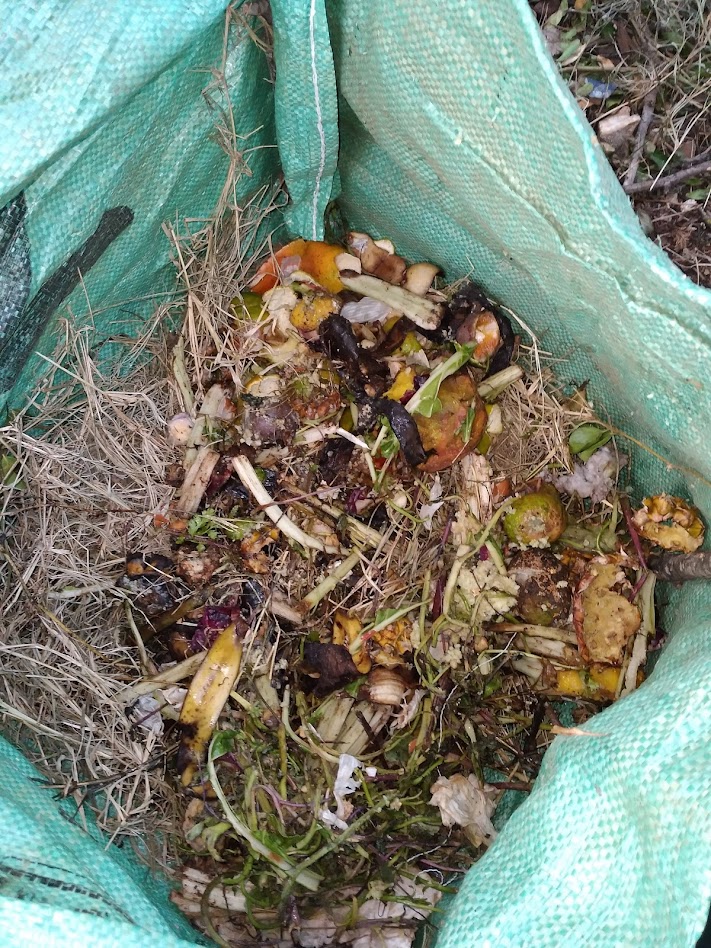
Vegetable and fruit peels, spent tea leaves (remove non-compostable bags), coffee grounds, leftover ugali, rice, bread, cereals (drained of excess water), bean pods and husks, eggshells, grass cuttings, fresh leaves.
Dry & Structural Materials (Browns)
Dry leaves, fine sawdust, rice bran, straw, dry grass, small dry twigs. Browns provide the carbon and structure that balance the high-nitrogen manures and green materials, allow air circulation, and prevent the pile from becoming waterlogged and smelly.
What NOT to compost: Avoid meat, fish, dairy products, cooked bones, fats and oils. These attract rats and other rodents, cause bad odours and do not compost cleanly. Also avoid materials from diseased plants, as pathogens may survive even the EM process.
Setting Up Your Composting Space
The composting setup can be scaled to match your farm size — from a small household bin to a large windrow on a commercial farm. Here is what works at each scale:
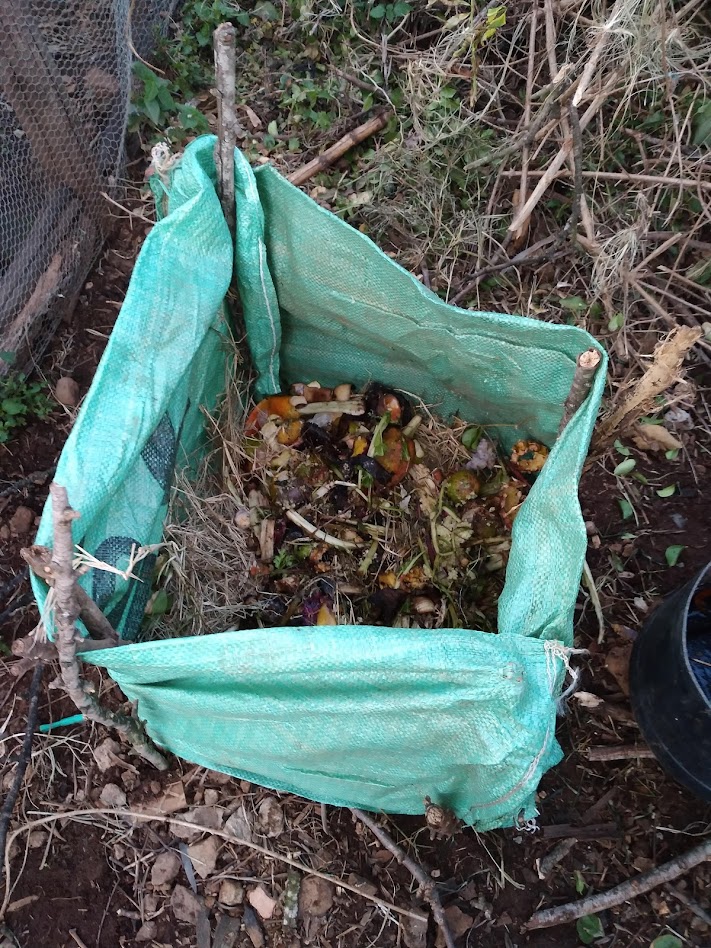
- Small household / kitchen garden: A 50-litre plastic drum or sack with ventilation holes punched in is enough for kitchen waste and small amounts of garden material. Even this small volume, when activated with EM 1, produces useful compost in 3–4 weeks.
- Medium farm (1–5 acres): Build an enclosure roughly 1 metre × 1 metre × 1 metre (3 ft × 3 ft × 3 ft) using wire mesh or wooden boards. This is the most practical size — large enough to generate sufficient heat, small enough to turn and manage easily. You can run two or three bays side by side to compost continuously through the season.
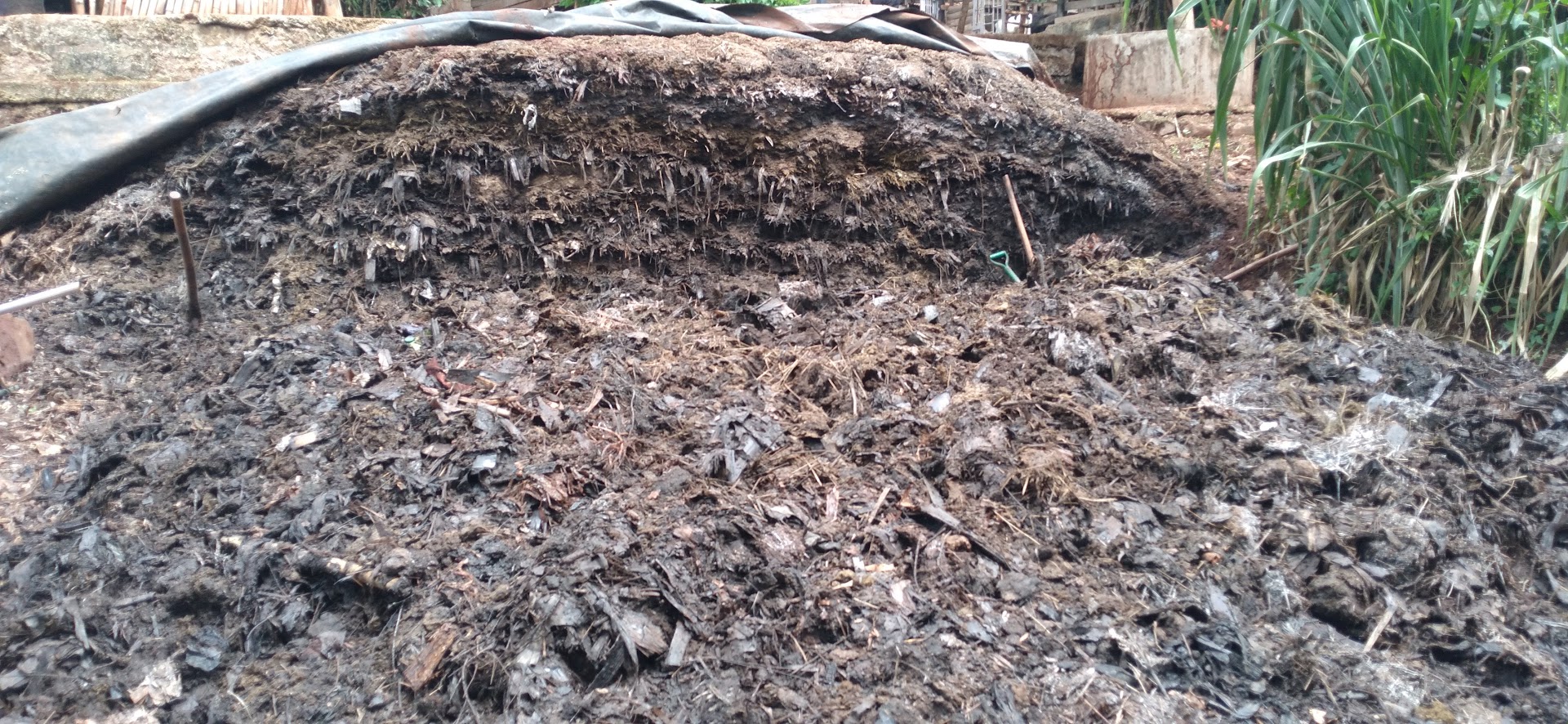
- Larger farm with livestock: For farms that generate large volumes of manure and crop residues, compost in open windrow piles — long heaps 1–1.5 metres high and 1.5–2 metres wide, of any length. These are turned using a tractor-mounted implement or simply with a fork jembe. Apply EM 1 solution generously with a watering can or backpack sprayer during each turn.
- Location: Choose a shaded or semi-shaded spot. Direct sunlight dries out the pile too quickly. Proximity to your water source makes wetting easier.
- Cover: The pile must be covered to protect from heavy rain and strong sun, but not sealed airtight — the composting process is aerobic and needs oxygen circulation.
The EM 1 Solution: Your Composting Activator
Before you start layering your materials, you need to prepare the EM 1 solution that you will use to wet the layers. This is the “activator” that introduces the beneficial microbes into the compost pile.
🧪 EM 1 Composting Solution — Recipe for 20 Litres
Mix thoroughly until the molasses is fully dissolved. This 20-litre solution is enough to wet one full composting pile of up to 1m³. For larger farm windrows, scale up proportionally — e.g. 2.5L EM + 2.5L molasses + 100L water applied with a backpack sprayer. Prepare fresh solution for each use; do not store diluted solution for more than a day.
Why molasses? The microbes in EM 1 need sugar as an energy source to multiply and become active. Molasses — which is rich in sugars and minerals — feeds the microbial community and accelerates the entire composting process. Do not skip it.
Step-by-Step: How to Make EM Compost
Collect and prepare your materials
Gather both your greens (wet, nitrogen-rich materials) and browns (dry, carbon-rich materials). Chop or break larger items into smaller pieces — the smaller the pieces, the faster they decompose. For crop residues like maize stalks, a panga or slasher to chop them into 10–15 cm lengths makes a significant difference to decomposition speed.
If you are using manure: Fresh livestock manure (especially chicken manure) is very high in nitrogen and moisture — treat it as your primary green material. Layer it in thin layers (5 cm) with generous amounts of dry crop residues or dry leaves as your browns. Too much fresh manure without enough dry material produces a wet, smelly pile that loses nitrogen as ammonia gas.
Aim for a mix that is roughly balanced between greens and browns by volume. A simple test: squeeze a handful — it should feel like a wrung-out sponge, slightly moist but not dripping. Add more browns if it drips water; add more greens or EM solution if it feels bone dry.
Place a base layer of coarse material
Start with a 10–15 cm layer of coarse, dry material — twigs, dry maize stalks, or chunky dry leaves — at the bottom of your bin. This creates an air gap at the base, allowing oxygen to circulate upward through the pile. Good aeration is critical to a healthy, fast decomposing pile.
Layer your browns and greens alternately
Build the pile in alternating layers, each about 1–2 cm thick:
- A layer of browns (dry leaves, sawdust, dry stalks)
- A layer of greens (vegetable waste, grass, food scraps)
- Sprinkle the EM 1 solution between each layer
The wetness should feel like a wrung-out sponge — uniformly moist but not dripping. Overly wet materials stop oxygen from flowing and cause the pile to go anaerobic (rotting and smelly).
Continue layering until you reach a maximum height of 1 metre (3 feet) or until your materials are exhausted.
Cover and wait — but check after 2 days
Cover the pile with a tarpaulin, sack or lid to retain moisture and protect from rain and direct sun. Leave it for 2 days, then check by inserting a fork jembe or stick into the centre of the pile.
- ✔ Steam and warmth from the centre — the microbes are active and the pile is working well. Time to turn it.
- ✗ Cold and wet with an unpleasant smell — too much moisture. Mix in more dry brown materials and leave for another 2 days before checking again.
- ✗ Cold and dry — not enough moisture or microbial activity. Sprinkle more EM solution and mix lightly.
Turn, mix and re-wet every 4–6 days
When the pile is warm and steaming, turn it thoroughly using a fork jembe or pitchfork. The goal is to move outer materials into the centre (where the heat is greatest) and inner materials to the outside.
While turning, sprinkle additional EM 1 solution to maintain moisture and reintroduce fresh microbes. Cover and leave for another 4–6 days.
Repeat this process over 3–5 weeks. With each turning, you will notice the original materials becoming less and less recognisable as they transform into dark, crumbly compost.
Recognise when your compost is ready
Your EM compost is mature and ready to use when:
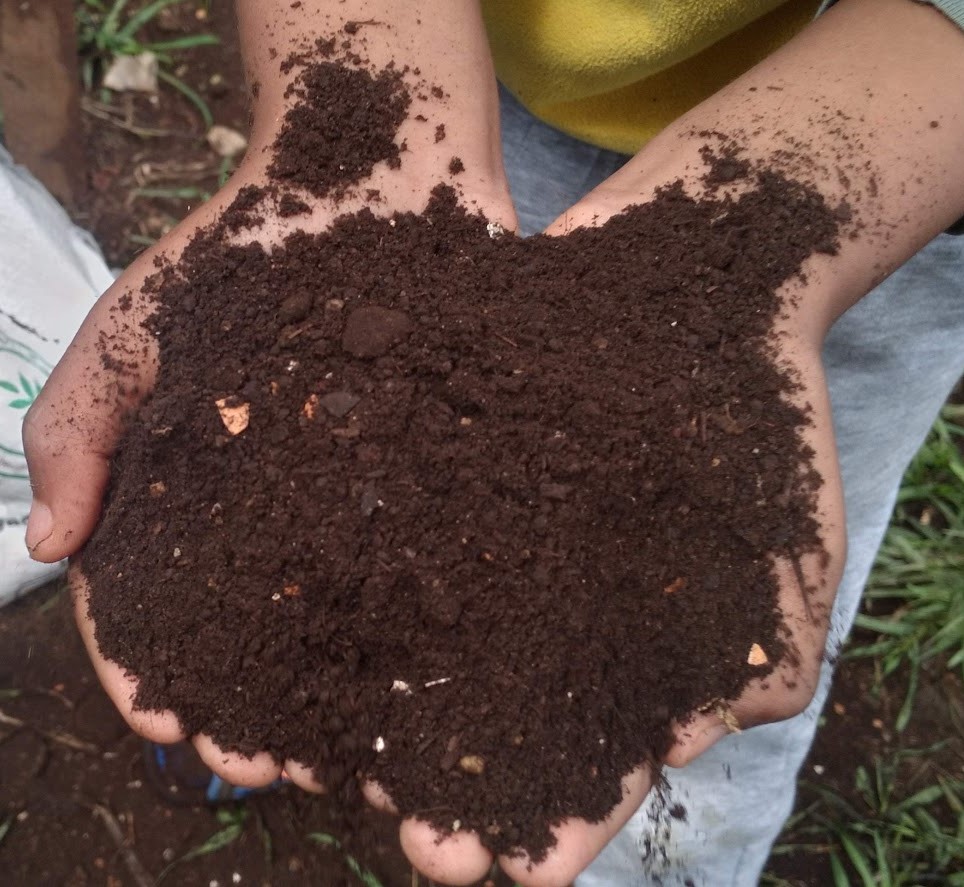
- It is dark brown to black in colour — rich and crumbly in texture
- It has a pleasant, earthy smell — like fresh forest soil after rain
- The original materials are no longer recognisable
- The pile no longer generates significant heat — just a mild warmth at most
A foul, putrid smell means the pile went anaerobic — it was too wet and lacked oxygen. This produces rotting rather than composting. If this happens, add plenty of dry browns, turn the pile vigorously to aerate it, and apply fresh EM 1 solution. It can be rescued.
Store and apply your finished compost
Bag the mature compost in sacks and store in a cool, shaded place away from direct sunlight and heavy rain. Properly stored EM compost retains its biological activity for several months.
Application rates:
- Farm / field crops: 1–2 tonnes per acre (10–20 bags of 50 kg), incorporated during land preparation
- Kitchen garden / vegetable beds: Mix liberally into the top 15 cm of soil — 2–5 kg per square metre
- Potted plants: Mix 20–30% compost into your potting mixture
- Tree planting holes: Fill 1/3 of the planting hole with mature EM compost
Unlike chemical fertilizers, EM compost will not burn roots regardless of how much you apply — so do not worry about over-application.

Troubleshooting: Common Problems and Fixes
| Problem | Likely Cause | Solution |
|---|---|---|
| Foul, rotten smell | Too wet, not enough air (anaerobic) | Add more dry browns, turn vigorously to aerate, reapply EM 1 solution |
| Pile not heating up | Too dry, or too small, or not enough nitrogen | Add more greens and sprinkle EM solution. Pile may be too small — try to make it larger. |
| Flies and fruit flies | Fresh food scraps exposed on surface | Always bury fresh kitchen waste under a layer of browns. Apply more EM solution to the surface. |
| Pile too dry | Too many browns, or rain cover too tight | Sprinkle EM solution generously while turning. Ensure the cover allows some air flow. |
| Very slow decomposition | Cold weather, or too many large woody materials | Chop materials smaller. In cold weather (e.g. Kinangop highlands), the process naturally slows — be patient and continue turning. |
| Rodents getting in | Meat or oily food scraps were added | Remove meat/oily items immediately. Use a closed bin with a lid rather than an open pile. Never add meat or dairy. |
Special Case: Composting Livestock Manure with EM 1
For farmers who keep cattle, chicken, goats or other livestock, manure is the single most abundant organic resource available — and it is also one of the most underutilised. Applied fresh, manure can burn crops, spread weed seeds, and even introduce pathogens into the soil. Composted with EM 1, that same manure becomes a safe, nutrient-rich, biologically active fertilizer that is among the best inputs available.
Here is what makes EM 1 particularly valuable for manure composting:
- Chicken manure is extremely high in nitrogen — so high that it generates intense ammonia smells and can burn plants if applied raw. EM 1 stabilises the nitrogen, reduces ammonia losses and makes the nutrients available to plants in a controlled way. The finished compost is safe to apply even at high rates.
- Cattle dung is bulky and slow to break down on its own. EM 1 accelerates decomposition dramatically, cutting breakdown time from 3–6 months to 4–6 weeks. Combining cattle dung with crop residues (e.g. chopped maize stalks) gives an ideal carbon-to-nitrogen balance.
- Goat and sheep droppings are already relatively dry and nutrient-dense. They compost well on their own or mixed with other materials. EM 1 adds microbial diversity and speeds the process.
Practical tip for dairy farmers: If you clean your cattle pen daily, collect the dung and any bedding material (straw, dry leaves, sawdust) together and build your compost pile directly from the pen cleanings. Apply EM 1 solution as you build the pile each day. Within 4–6 weeks of accumulation you will have excellent compost ready for the next planting season.
Beyond Composting: Other Ways EM 1 Supercharges Your Farm
EM 1 is not just for composting. Once you have it, a single bottle opens up a range of other soil and crop health applications. Here are the most valuable uses for Kenyan farmers:
Soil Drench at Planting
Dilute 1 litre EM in 200 litres of water and drench the soil before or after planting. Boosts root zone microbial diversity from day one, improving nutrient cycling and disease suppression.
Seedling Establishment
Drench seedling nurseries and transplant holes with diluted EM 1. Dramatically improves transplant survival rates by reducing root stress and suppressing damping-off diseases.
Manure Composting Activator
Spray EM 1 onto cattle, chicken, or goat manure heaps. Speeds up decomposition from months to weeks, eliminates odours, destroys weed seeds and pathogens, and enriches the manure with beneficial microbes.
Crop Residue Decomposition
After harvest, spray EM 1 solution onto chopped crop residues left on the field. Instead of burning them (which destroys soil carbon), the residues break down rapidly and return their nutrients to the soil.
Livestock Housing & Pit Latrines
Spray diluted EM 1 in animal pens, chicken coops and pit latrines to eliminate odours and reduce fly breeding. A non-agricultural use that many Kenyan households find immediately valuable.
Regular Soil Application
Apply diluted EM 1 to crop rows or fields 2–3 times per season as a soil health maintenance treatment. Builds long-term microbial diversity — the foundation of sustainable soil fertility.

The Long-Term Benefit: Building Soil That Keeps Giving
The most important thing to understand about EM composting is that it is not a once-off fix. It is a long-term practice that improves your soil more and more with every season you apply it — and it compounds. Each season’s compost application builds on the last, gradually restoring the soil’s biological engine.
Kenyan soils — particularly in areas under continuous cultivation like the central highlands, the Rift Valley, and western Kenya — have been steadily losing organic matter for decades. Continuous crop removal, burning of crop residues, and reliance on mineral fertilizers without organic matter replacement have depleted the biological activity that makes soil productive. The result is that many farmers are spending more on fertilizer each season for the same or declining yields, because the soil’s own fertility engine has been allowed to run down.
Composting with EM 1 — using the organic materials your farm already produces — directly reverses that trend at very low cost. Every season you add EM-activated compost to your soil, you are:
- Adding billions of beneficial microbes that establish and multiply in your soil
- Building soil organic carbon that improves water holding capacity
- Increasing the soil’s ability to hold and release nutrients efficiently
- Reducing your dependence on external chemical inputs over time
- Creating a resilient farm that performs better under drought and rainfall variability
“The best time to start composting with EM 1 was at the beginning of last season. The second best time is today.”
No Time to Make Your Own? We Have Ready-Made Compost
We completely understand that not every farmer has the time, space or labour to make their own compost every season — especially during busy planting periods. That is why Shamba Mtaani offers both the EM 1 for those who want to make their own, and a ready-made compost that you can purchase and apply directly to your farm or garden with no preparation required.
EM 1 — Effective Microorganisms
Ksh 350 / litreActivate quality compost from your farm’s manure, crop residues and organic waste. One litre makes up to 200 litres of activating solution. OMRI certified, 100% organic.
Buy EM 1 →Shamba Mtaani Compost
Ksh 1,500 / 50 kg bagReady-to-use naturally composted vegetable material. Improves all soil types — loosens clay soils, improves water holding in sandy soils, boosts microbial activity.
Buy Compost →Order online at shambamtaani.com or visit us at Shop 5, Fountain Court, Magadi Road, Ongata Rongai. We also offer delivery and WhatsApp ordering — call or message us on 0100 451 190 / 0117 534 710.
Quick Reference: EM Composting at a Glance
- ✅ Time to mature: 3–5 weeks (vs 3–6 months for ordinary compost)
- ✅ Space needed: As small as a 50-litre drum for household use
- ✅ EM 1 solution ratio: 0.5L EM + 0.5L molasses + 20L water
- ✅ Turning frequency: Every 4–6 days
- ✅ Readiness signs: Dark colour, earthy smell, no original materials visible, no intense heat
- ✅ Farm application rate: 1–2 tonnes per acre at land preparation
- ✅ Root safety: Will not burn roots — cannot over-apply
- ✅ Cost: One 1-litre bottle of EM 1 (Ksh 350) activates multiple composting cycles across a season
Start Feeding Your Soil Today
Pick up your EM 1 from Shamba Mtaani and start turning your farm’s organic waste — manure, crop residues, food scraps — into quality compost that builds your soil season after season. Or if you need compost right now, our ready-made Shamba Mtaani Compost is available for immediate delivery.