by shambamtaani.com
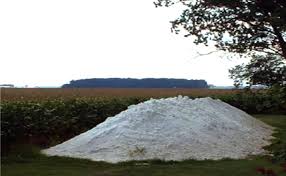
If you’ve ever tried farming on black cotton soil, you know the struggle. When it rains, your field becomes a sticky, waterlogged mess. When the dry season hits, the same soil cracks open like the earth is trying to swallow itself. And if you’re using borehole water for irrigation? You might be unknowingly adding salt to your problems—literally.
The good news? There’s a soil amendment that’s been helping farmers worldwide tackle these exact challenges: agricultural gypsum.
What Exactly Is Agricultural Gypsum?
Agricultural gypsum is calcium sulfate dihydrate (CaSO₄·2H₂O)—a naturally occurring mineral that looks like white or off-white powder or granules. Don’t let the chemistry scare you. Think of it as a soil doctor that brings calcium to replace troublesome sodium in your soil.
Unlike lime, gypsum won’t change your soil’s pH, making it safe to use even on crops that prefer neutral or slightly acidic conditions. Plus, it supplies two essential nutrients your crops need: calcium and sulfur.
The Black Cotton Soil Challenge: A Kenyan Reality
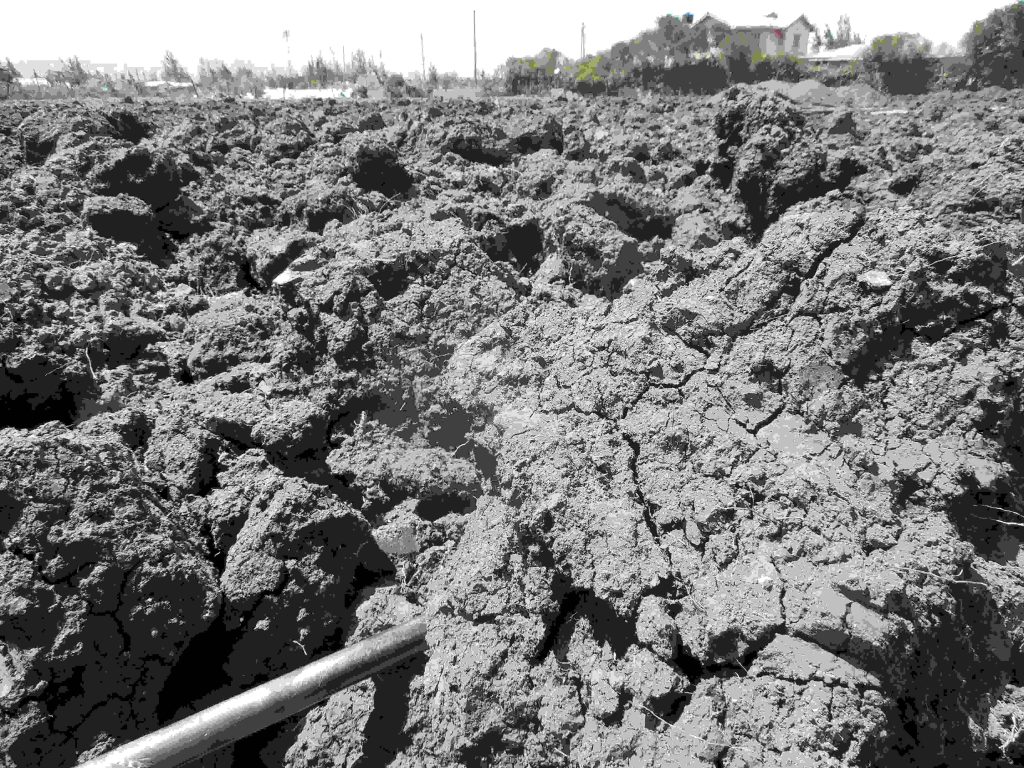
Here in Kenya, black cotton soil (also called vertisols or clay soil) is found in many productive farming areas—from parts of Nairobi’s outskirts to Machakos, Kajiado, the Kano plains in Kisumu, and the rice-growing areas of Mwea.
While these soils can be incredibly fertile when well-managed, they come with serious challenges:
- Poor drainage: That tight clay structure means water sits on the surface instead of moving through
- Compaction: The soil becomes rock-hard when dry, making it nearly impossible for roots to penetrate
- Swelling and shrinking: The soil expands when wet and cracks when dry, damaging plant roots
- Poor aeration: Tight clay particles leave little room for oxygen that roots desperately need
- Nutrient lockup: Even when nutrients are present, the soil structure can prevent plants from accessing them
Sound familiar?
The Hidden Enemy: Salinity
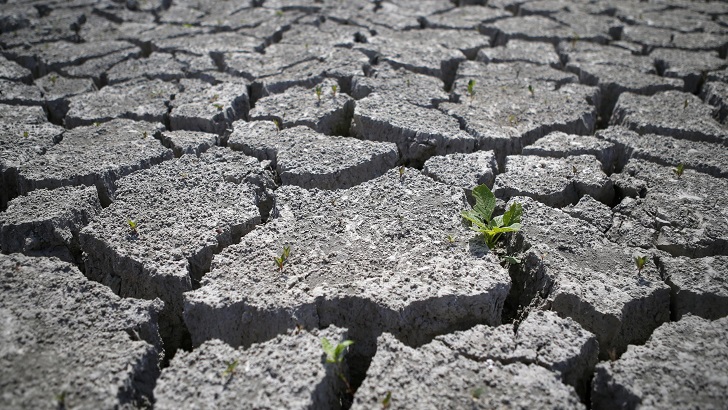
Now, add another layer to the problem. Many Kenyan farmers are drilling boreholes to secure water for irrigation—a smart move for drought-proofing your farm. But here’s what most don’t realize: borehole water often contains dissolved salts. Every time you irrigate, you’re adding these salts to your soil.
Over time, salt builds up. The signs are hard to miss:
- White crusty deposits on the soil surface
- Plants that look thirsty even when you’ve just watered
- Stunted growth and poor germination
- Yellowing leaves and reduced yields
In areas with poor drainage (hello again, black cotton soil!), these salts have nowhere to go. They just keep accumulating, season after season, slowly poisoning your soil.
Research shows that globally, more than 424 million hectares of topsoil and 833 million hectares of subsoil are affected by salinity. The problem is growing, and Kenya is not immune.
How Gypsum Solves Both Problems
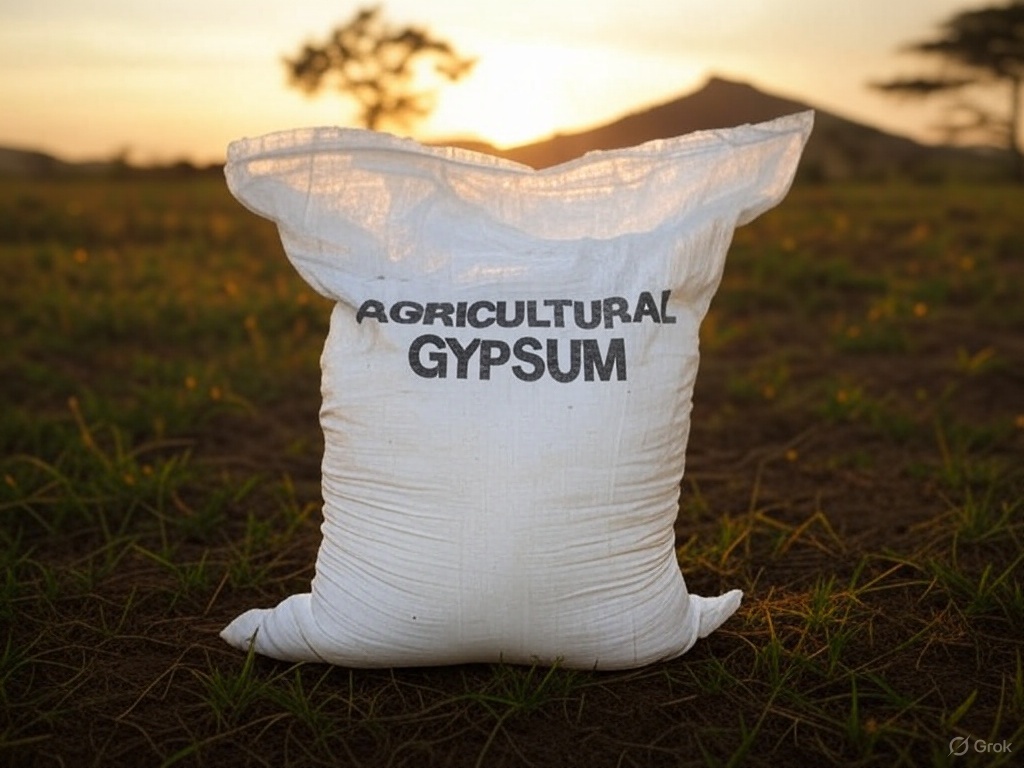
Agricultural Gypsum tackles clay soil problems AND salinity issues at the same time.
1. Breaking Up Clay Structure
When applied to heavy clay soils, gypsum works at the molecular level to promote flocculation—the process where tiny soil particles bind together to form larger aggregates. This creates:
- Better soil porosity so roots can actually penetrate
- Improved water infiltration (no more waterlogging!)
- Enhanced air exchange at the root zone
- Reduced soil crusting for better seedling emergence
Think of it like this: gypsum helps clay particles stick together in larger clumps, creating space between them. These spaces become highways for water, air, and roots.
2. Fighting Salt Buildup
The calcium in gypsum is a fighter. It regulates the exchange of sodium (Na+) for calcium (Ca2+) on the clay surfaces, thereby increasing the Ca2+/Na+ ratio in the soil solution.
In plain language: calcium kicks out sodium from where it’s stuck on soil particles. Once freed, that sodium can be washed away with irrigation or rain, taking the salt problem with it.
This is crucial for farmers using borehole water. The gypsum doesn’t just mask the problem—it actively removes the salt from your root zone.
3. Supplying Essential Nutrients
Beyond fixing soil structure and salinity, gypsum provides:
- Calcium: Critical for cell wall development and root growth
- Sulfur: Essential for protein synthesis, enzyme function, and helping plants resist disease
Real Results from Real Farmers
Farmers facing challenges of clay and saline soils have reported stronger plants, greener fields, higher yield expectations, and cost savings on application of agricultural gypsum.
Even better, long-term studies have shown that even after 16 years, gypsum continued to enhance subsoil chemical properties and crop yields. This isn’t a quick fix—it’s an investment in your soil’s future.
How to Use Gypsum on Your Farm
Application Rates
For general soil improvement on clay soils the application rate may vary from 10-80 bags (50kg) per acre (500Kg to 4000Kg per Acre) depending on the clay content and levels of salinity. For salinity problems, you might need more. This is where soil testing becomes invaluable.
Pro tip: At Cropnuts Soil Laboratories, we can test your soil to tell you exactly how much gypsum you need. Why guess when you can know?
When to Apply
- Before planting: Work it into the top 15-20cm of soil if possible
- During the rainy season: If you can’t incorporate it, rain will help it move into the soil
- Split applications: For severe problems, apply half now and half 6 months later
Best Practices
- Always start with a soil test: Know your enemy before you fight it
- Ensure adequate water: Gypsum needs moisture to work. Whether from rain or irrigation, make sure your soil gets watered after application
- Be patient: Gypsum is a long-term solution, not an overnight miracle. You’ll see improvements over weeks and months
- Combine with organic matter: Adding manure or compost alongside gypsum gives you the best of both worlds
The Economics Make Sense
Some farmers worry about the cost. Let’s do the math:
- Investment: 20-25 bags of gypsum per acre (one-time or periodic application)
- Returns: Better germination, stronger plants, improved yields, lower irrigation needs
- Long-term benefit: Soil improvement that lasts for years
Farmers in salinity-affected areas reported cost savings and improved crop health after gypsum treatment, demonstrating that the investment pays for itself through better yields and reduced input costs.
Compare this to the cost of poor yields season after season, or the expense of completely replacing your soil—and suddenly, gypsum looks like a bargain.
What Crops Benefit Most?
Virtually any crop grown on clay or saline soils benefits from gypsum, but it’s particularly valuable for:
- Field crops: Maize, beans, wheat, sorghum
- Horticultural crops: Tomatoes, cabbages, sukuma wiki, kales
- Tree crops: Avocados, mangoes (which hate waterlogging)
- Fodder crops: Napier grass, lucerne
Even crops traditionally grown on black cotton soil—like cotton itself—perform better when the soil structure is improved.
Common Questions Farmers Ask
Q: Will gypsum acidify my soil like some fertilizers?
A: No! Unlike lime, gypsum doesn’t change soil pH. It’s safe for all crops.
Q: Can I mix gypsum with other fertilizers?
A: Yes, but apply them separately for best results. Gypsum is about soil structure; fertilizers are about nutrition.
Q: How often should I apply gypsum?
A: It depends on your soil condition. Some farmers apply annually; others every 2-3 years. A soil test will guide you.
Q: Will gypsum help if I don’t have salinity problems?
A: Absolutely! Even without salt issues, gypsum improves clay soil structure, water infiltration, and nutrient availability.
The Bottom Line
Your soil is your most valuable asset. Black cotton soil, despite its challenges, can be incredibly productive when properly managed. Salinity from borehole water doesn’t have to be a death sentence for your farm.
Agricultural gypsum offers a practical, affordable, and proven solution to both challenges. It’s not magic—it’s science. And it works.
At Shambamtaani, we stock quality agricultural gypsum alongside other organic inputs and soil amendments. But more importantly, we can connect you with Cropnuts Soil Laboratories for professional soil testing. Because the best farming decisions start with knowing your soil.
Don’t let your soil fight against you. Give it the calcium it needs, break up that stubborn clay, and wash away those salts. Your crops—and your wallet—will thank you.
Ready to improve your soil? Contact us at www.shambamtaani.com for agricultural gypsum and expert agronomy advice. Or visit Cropnuts Soil Laboratories (cropnuts.com) for comprehensive soil testing. Because better soil means better yields.
Call or WhatsApp us on 0100 451190 or 0117 534710
Remember: Good farming isn’t about fighting nature—it’s about working with it.